
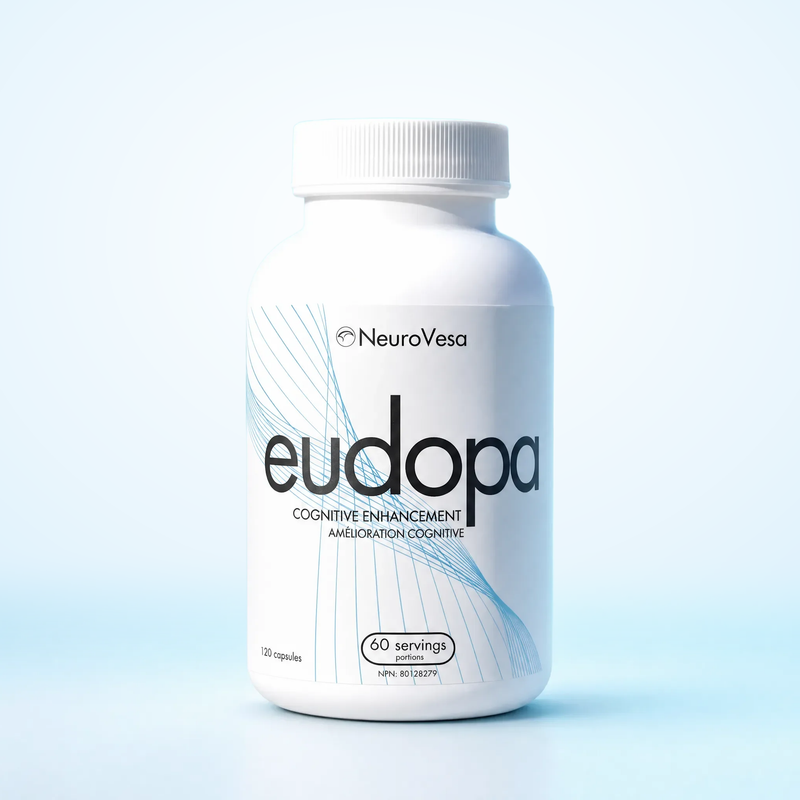
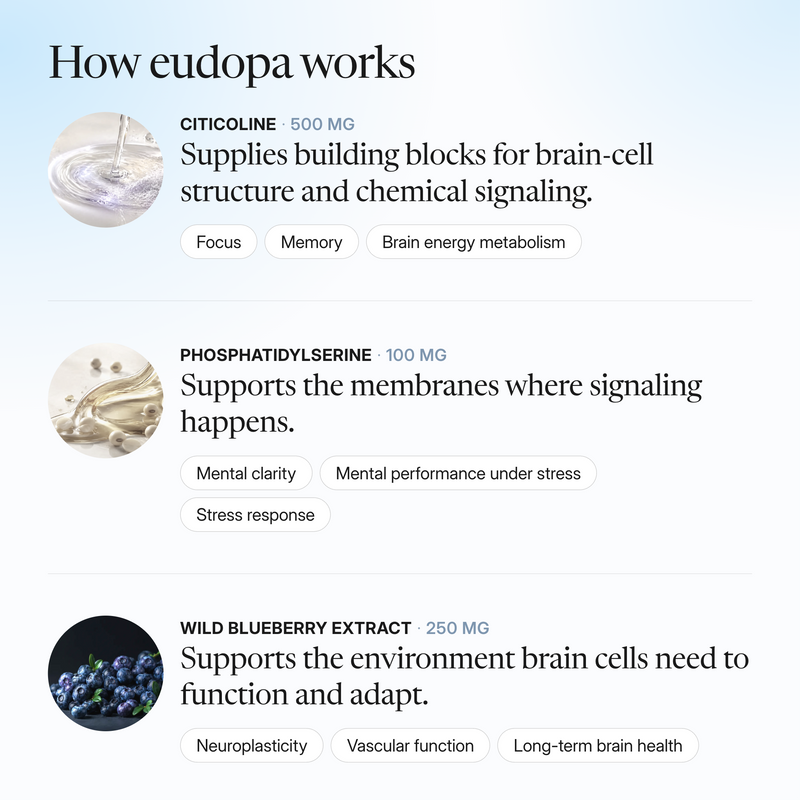
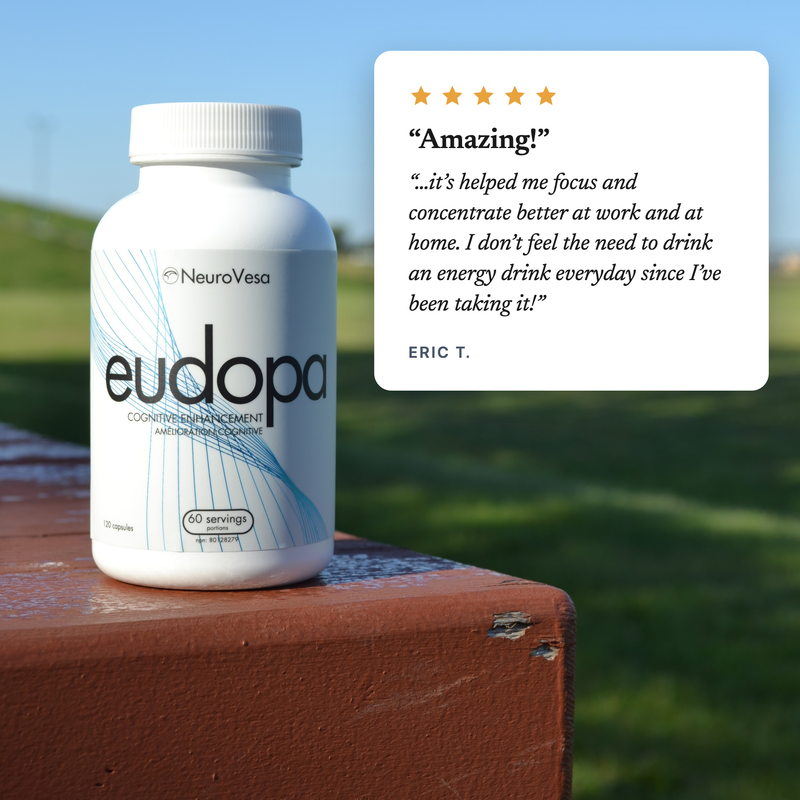
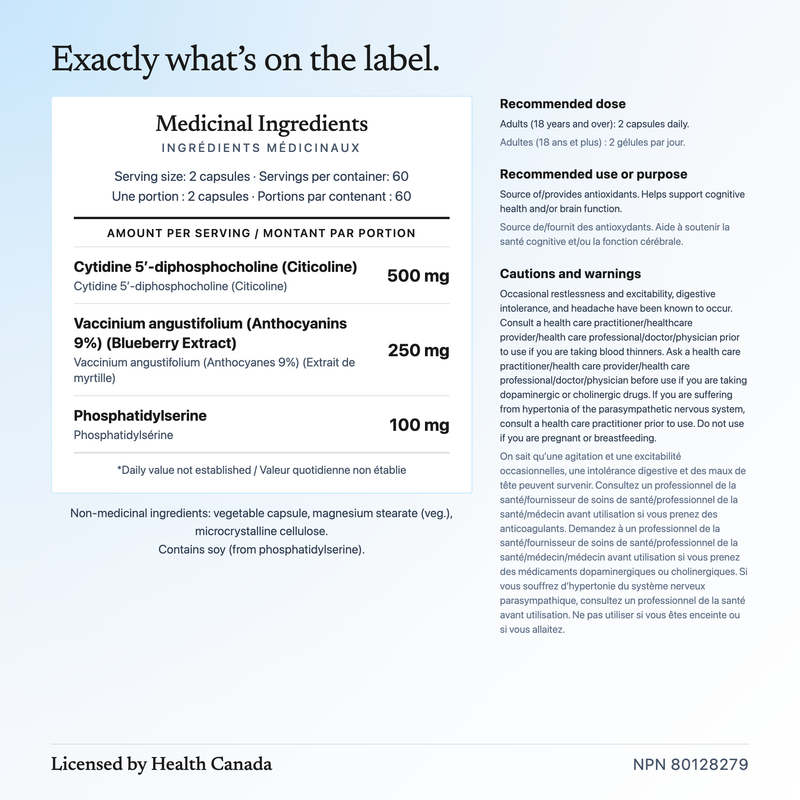
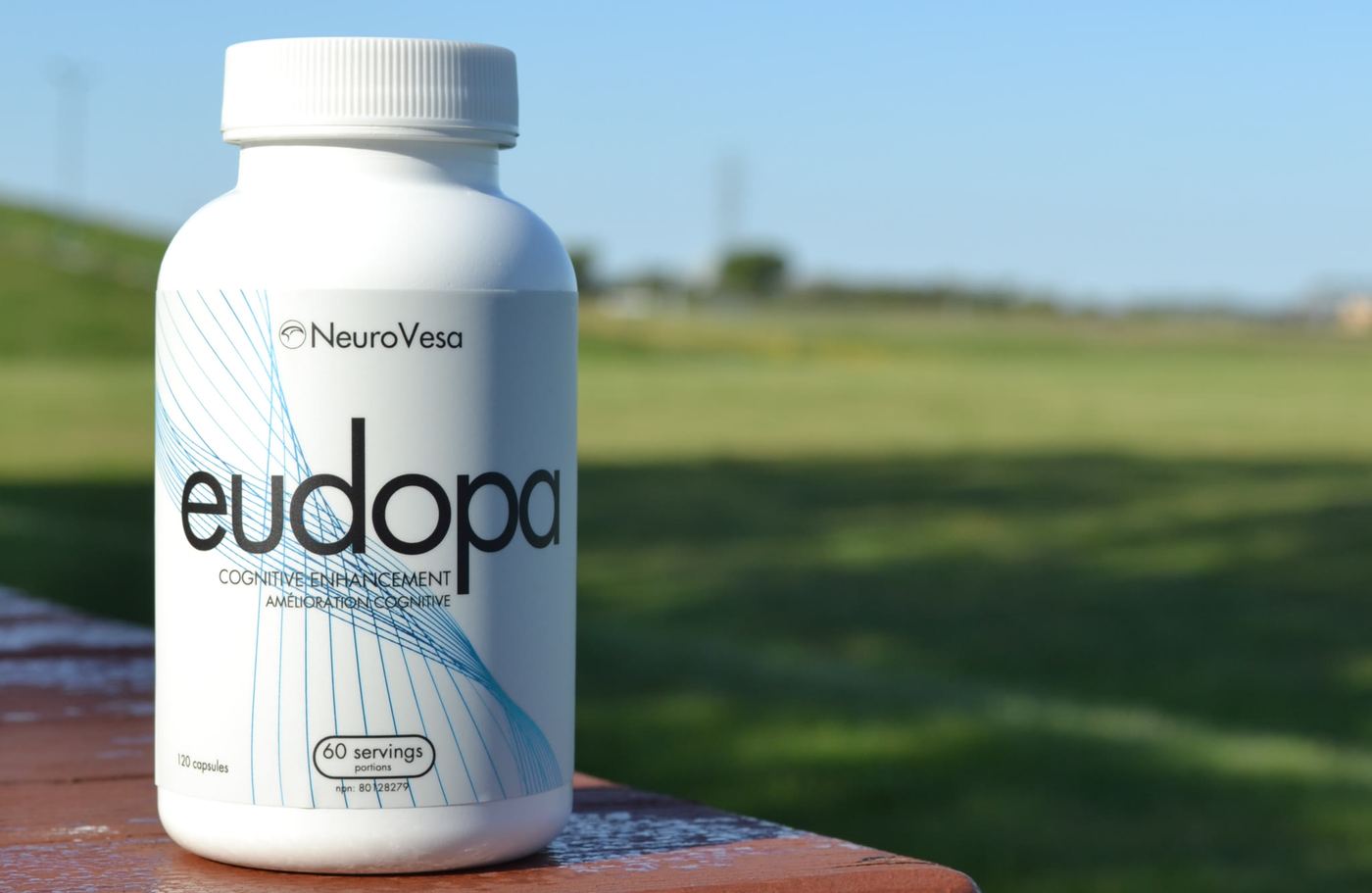
eudopa is a caffeine-free daily supplement specifically designed to support brain health and cognitive performance. Its three clinically studied ingredients were selected to support different processes involved in how brain cells function and communicate.
Choose your subscription:
Automatically charged at the frequency below. Cancel anytime.
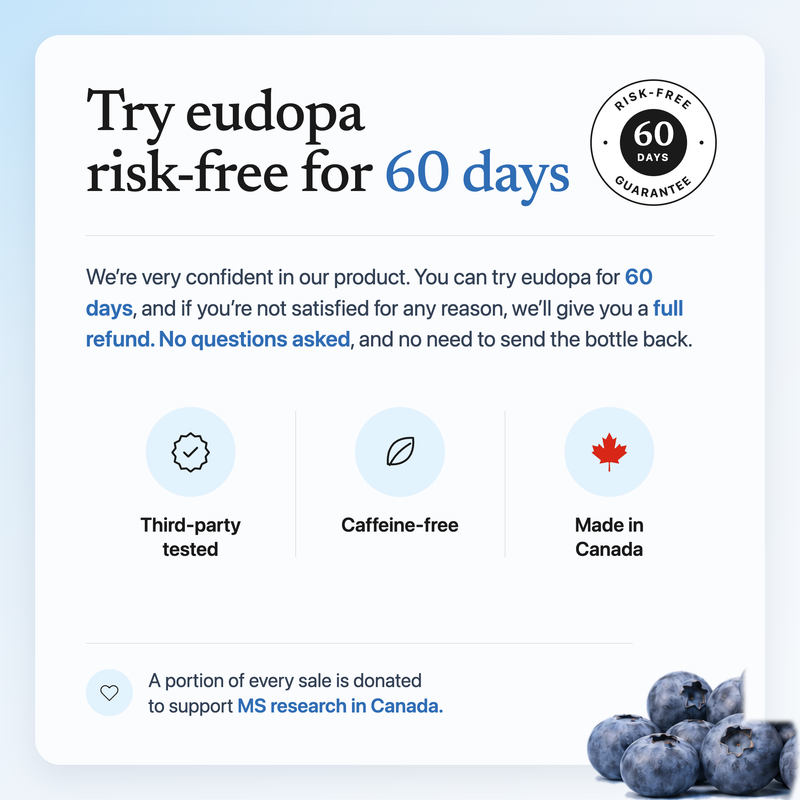
Try it risk-free for 60 days. Not in love? Get a full refund — no questions asked, and no need to send the bottle back.
What’s inside
Plus the vegan capsule, and nothing else. No proprietary blends, no caffeine.
How to use
Who’s it for
Those who find it especially useful:•Students and working professionals: those who demand a lot from their brain through long days of studying, work and decision-making, and want daily support for cognitive health and brain function.•Health-conscious adults: those who want to look after their brain the same way they already look after their heart, as one simple habit they can keep for the decades ahead.Do not use if you are pregnant or breastfeeding. Consult a health care practitioner prior to use if you are taking blood thinners. Ask a health care practitioner before use if you are taking dopaminergic or cholinergic drugs. If you are suffering from hypertonia of the parasympathetic nervous system, consult a health care practitioner prior to use. Occasional restlessness and excitability, digestive intolerance, and headache have been known to occur.
Shipping & guarantee
Try it risk-free: the 60-day money-back guarantee gives you a full refund to your original payment method, and there is no need to send the bottle back.
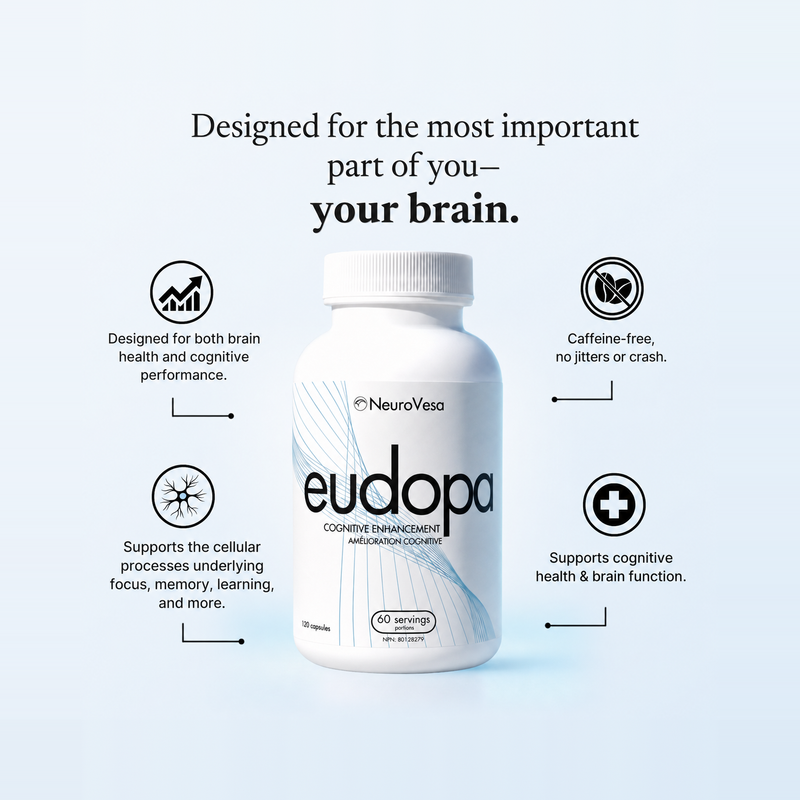
Designed for the most important part of you. Your brain.
“I find it helps with memory and I appreciate the simple ingredients, without additives.”
Judith M. · Verified buyer
“Fantastic, feel focused, calm and energized.”
Jarrod L. · Verified buyer
“I feel energetic and a mental clarity that helps with my work.”
Brodie C. · Verified buyer
“Really like the product. Has made me feel clearer mentally, thus far. Highly recommend.”
Dallas E. · Verified buyer
Brain health is for everyone.

 Made in Canada
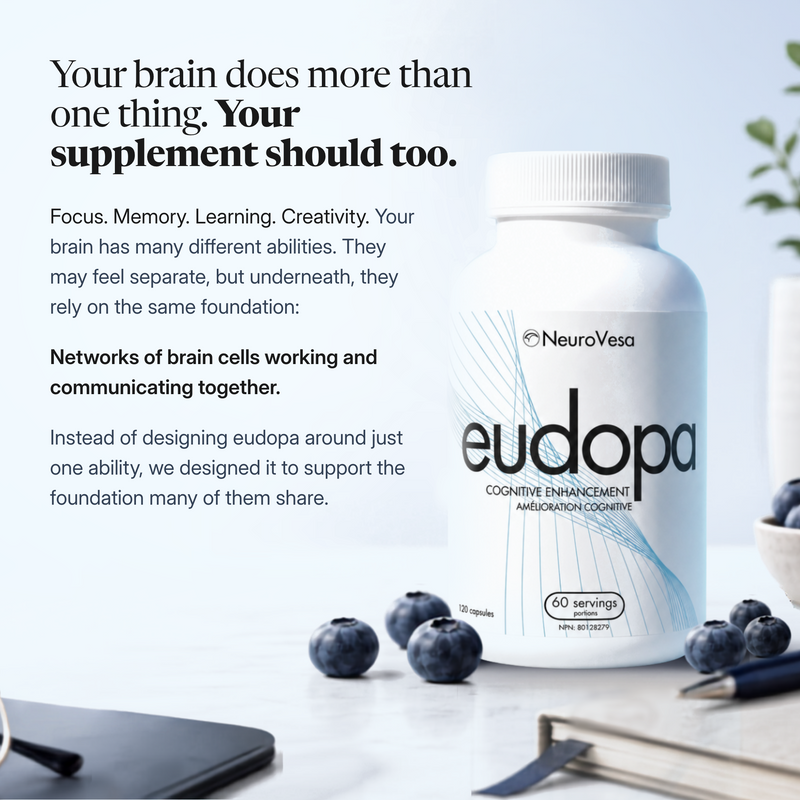
Your brain has many different abilities. But they all have something in common.
Focus. Memory. Learning. Problem-solving. Self-control.
These are just a few of the many cognitive abilities your brain gives you. They may do very different things, but underneath, they all depend on the same foundation: networks of brain cells functioning and communicating together.

Brain cells function and communicate
Brain cells send and receive signals from one another. This communication allows information to move between cells throughout the brain, and it depends on each cell doing its own job well.

Those cells form networks
Brain cells work together in connected networks, with different networks supporting different cognitive functions.

Those networks make cognitive abilities possible
The coordinated activity of these networks gives rise to abilities like focus, memory, learning, problem-solving and self-control.
That’s the foundation eudopa was designed around.
Instead of designing eudopa around one cognitive ability like memory or focus, its three ingredients were selected to support different processes involved in brain-cell function and communication that many cognitive abilities depend on.
3 clinically studied ingredients. No proprietary blends.


Memory16–19. Recall and memory performance.
Cognitive Performance18–21. Performance across selected memory and executive-function tasks.
Vascular Function16,19,21,22. Blood-flow and endothelial-function measures.

At NeuroVesa, the brain is our only focus.
We don’t make protein powders, beauty supplements, or joint formulas. We specialize in the brain, and only the brain.
That focus allows us to go deeper into the science, be more selective about what we formulate, and hold every product we create to a higher standard.
eudopa is the first product we built around that philosophy.
“I have only been taking this supplement for two weeks - no side effects and better able to focus.”
Wendy D.Verified buyer
“Great product. Mental clarity and energy was astounding. Would absolutely recommend this product.”
DylanVerified buyer
“I’ve been using eudopa for about two years- I’ve seen a great increase in focus, memory and mood.”
Christine S.Verified buyer

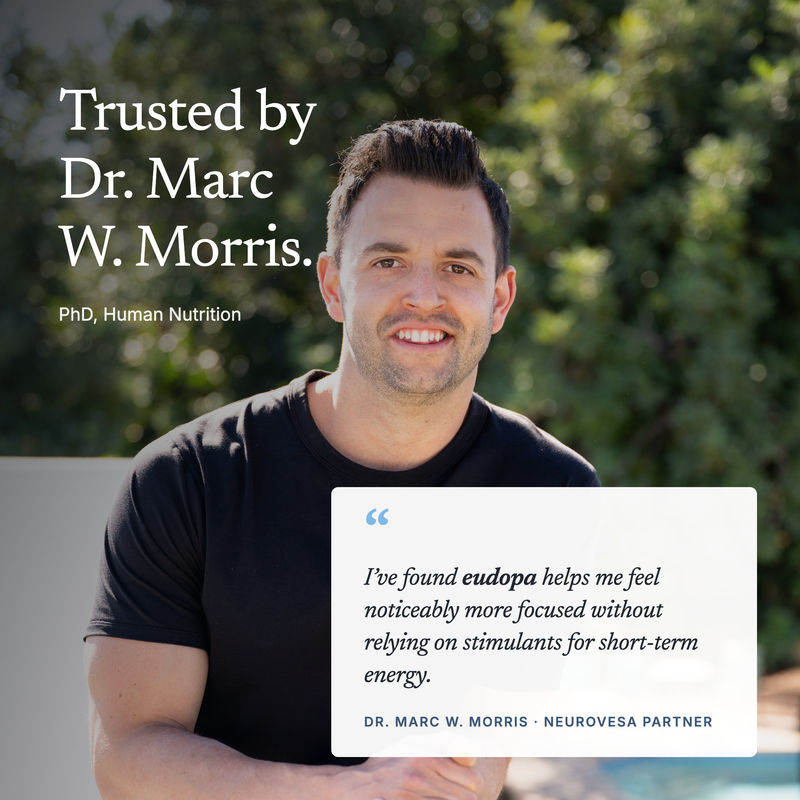
“I’ve found eudopa helps me feel noticeably more focused without relying on stimulants for short-term energy. What interested me about the formula is that its ingredients support processes involved in brain-cell function and communication, which are important to many aspects of cognitive performance.”
Marc Morris, PhD
PhD in Human Nutrition
NeuroVesa brand partnerEvery batch of eudopa is independently tested for quality, purity, and identity.
Every batch is tested two ways: the finished product is screened for contaminants, and an independent laboratory verifies the active ingredients are exactly what the label says. We publish both reports in full below.
The best investment you can make is in your brain.

Frequently asked questions.
What makes eudopa different from other brain supplements?
eudopa is the only brain supplement that combines citicoline, phosphatidylserine, and wild blueberry extract. Each ingredient was selected to support a different process involved in how brain cells function and communicate.
Essentially all cognitive abilities, from focus and memory to learning, problem-solving, and creativity, depend on brain cells working together. Instead of focusing on one ability alone, eudopa was designed to support the foundation they all share.
How long does it take to notice benefits?
The research behind eudopa’s ingredients reflects outcomes measured with consistent daily use. eudopa is designed to work gradually over time, not produce overnight changes. Taking it consistently each day, ideally around the same time, is the most reliable way to experience its full benefits.
That said, some people may begin noticing changes within 1–2 weeks of consistent use, with more noticeable effects potentially developing over 4–6 weeks. Results vary from person to person.
How and when should I take eudopa?
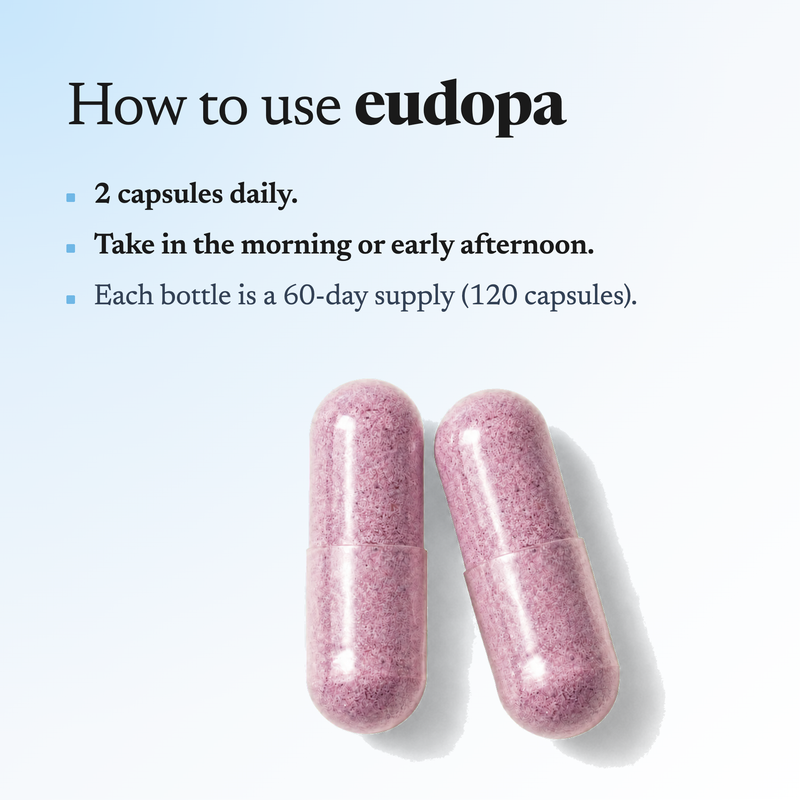
Adults should take two capsules daily, preferably in the morning. eudopa can be taken with or without food, although taking it with a meal may be more comfortable if you have a sensitive stomach.
You can take both capsules together or split the serving by taking one in the morning and one in the early afternoon. eudopa is not a stimulant, but some people may feel more alert or focused after taking it, so we recommend avoiding it close to bedtime.
Is eudopa vegan, and does it contain any allergens?
Yes. eudopa is made without animal-derived ingredients and is suitable for vegans.
It does contain soy because its phosphatidylserine is derived from soy lecithin. Anyone with a soy allergy should avoid taking eudopa.
Can I take eudopa with caffeine?
Yes, eudopa is caffeine-free and contains no stimulants.
Can I take eudopa alongside prescription medications?
We recommend consulting your healthcare provider before adding any supplement to your routine if you are currently taking prescription medications. This is particularly important if you:
- Take blood thinners
- Take dopaminergic or cholinergic drugs
- Have hypertonia of the parasympathetic nervous system
Your healthcare provider is the right resource for guidance specific to your health situation.
Does eudopa have any side effects?
The ingredients in eudopa are generally well tolerated when taken as directed. However, some people may experience side effects such as headaches or digestive discomfort.
Taking eudopa with food may help if you have a sensitive stomach. If side effects persist or you experience an allergic reaction, stop use and consult your healthcare provider.
What if eudopa isn’t right for me?
eudopa is backed by our 60-day money-back guarantee. This gives you time to take it consistently and decide whether it is right for you.
If you are not satisfied, email us at support@neurovesa.com within 60 days of your purchase and we will issue a refund. No questions asked, and no need to send the bottle back.
eudopa is a natural health product licensed by Health Canada, NPN 80128279. Licensed claims: “Source of/Provides antioxidants. Helps support cognitive health and/or brain function.” This product is not intended to diagnose, treat, cure or prevent any disease. Read the label and follow the directions.
The references below report research on individual ingredients, not on the finished eudopa formula, and the studied preparations and doses may differ from those in eudopa. Individual results may vary.
As with any supplement, consult a health-care practitioner if you are pregnant, nursing, or taking medication.
McGlade E, Locatelli A, Hardy J, Kamiya T, Morita M, Morishita K, Sugimura Y, Yurgelun-Todd D. Improved attentional performance following citicoline administration in healthy adult women. Food and Nutrition Sciences. 2012;3(6):769–773. doi:10.4236/fns.2012.36103
Nakazaki E, Mah E, Sanoshy K, Citrolo D, Watanabe F. Citicoline and memory function in healthy older adults: a randomized, double-blind, placebo-controlled clinical trial. Journal of Nutrition. 2021;151(8):2153–2160. doi:10.1093/jn/nxab119
Silveri MM, Dikan J, Ross AJ, Jensen JE, Kamiya T, Kawada Y, Renshaw PF, Yurgelun-Todd DA. Citicoline enhances frontal lobe bioenergetics as measured by phosphorus magnetic resonance spectroscopy. NMR in Biomedicine. 2008;21(10):1066–1075. doi:10.1002/nbm.1281
Wurtman RJ, Regan M, Ulus I, Yu L. Effect of oral CDP-choline on plasma choline and uridine levels in humans. Biochemical Pharmacology. 2000;60(7):989–992. doi:10.1016/S0006-2952(00)00436-6
McMaster CR. From yeast to humans — roles of the Kennedy pathway for phosphatidylcholine synthesis. FEBS Letters. 2018;592(8):1256–1272. doi:10.1002/1873-3468.12919
Fagone P, Jackowski S. Phosphatidylcholine and the CDP-choline cycle. Biochimica et Biophysica Acta. 2013;1831(3):523–532. doi:10.1016/j.bbalip.2012.09.009
Knott V, de la Salle S, Choueiry J, et al. Neurocognitive effects of acute choline supplementation in low, medium and high performer healthy volunteers. Pharmacology Biochemistry and Behavior. 2015;131:119–129. doi:10.1016/j.pbb.2015.02.004
Kato-Kataoka A, Sakai M, Ebina R, Nonaka C, Asano T, Miyamori T. Soybean-derived phosphatidylserine improves memory function of the elderly Japanese subjects with memory complaints. Journal of Clinical Biochemistry and Nutrition. 2010;47(3):246–255. doi:10.3164/jcbn.10-62
Jorissen BL, Brouns F, Van Boxtel MPJ, Ponds RWHM, Verhey FRJ, Jolles J, Riedel WJ. The influence of soy-derived phosphatidylserine on cognition in age-associated memory impairment. Nutritional Neuroscience. 2001;4(2):121–134. This randomized trial did not find significant cognitive differences versus placebo. doi:10.1080/1028415X.2001.11747356
Baumeister J, Barthel T, Geiss KR, Weiss M. Influence of phosphatidylserine on cognitive performance and cortical activity after induced stress. Nutritional Neuroscience. 2008;11(3):103–110. doi:10.1179/147683008X301478
Benton D, Donohoe RT, Sillance B, Nabb S. The influence of phosphatidylserine supplementation on mood and heart rate when faced with an acute stressor. Nutritional Neuroscience. 2001;4(3):169–178. doi:10.1080/1028415X.2001.11747360
Hellhammer J, Fries E, Buss C, Engert V, Tuch A, Rutenberg D, Hellhammer DH. Effects of soy lecithin phosphatidic acid and phosphatidylserine complex (PAS) on the endocrine and psychological responses to mental stress. Stress. 2004;7(2):119–126. Tested a phosphatidylserine/phosphatidic-acid complex. doi:10.1080/10253890410001728379
Hellhammer J, Vogt D, Franz N, Freitas U, Rutenberg D. A soy-based phosphatidylserine/phosphatidic acid complex (PAS) normalizes the stress reactivity of hypothalamus-pituitary-adrenal-axis in chronically stressed male subjects: a randomized, placebo-controlled study. Lipids in Health and Disease. 2014;13:121. Tested a phosphatidylserine/phosphatidic-acid complex; favourable hormonal findings were in the high-chronic-stress subgroup. doi:10.1186/1476-511X-13-121
Monteleone P, Maj M, Beinat L, Natale M, Kemali D. Blunting by chronic phosphatidylserine administration of the stress-induced activation of the hypothalamo-pituitary-adrenal axis in healthy men. European Journal of Clinical Pharmacology. 1992;42:385–388. Early study using high-dose bovine-derived phosphatidylserine and exercise stress. doi:10.1007/BF00280123
Kim HY, Huang BX, Spector AA. Phosphatidylserine in the brain: metabolism and function. Progress in Lipid Research. 2014;56:1–18. Review of endogenous phosphatidylserine membrane biology. doi:10.1016/j.plipres.2014.06.002
Whyte AR, Cheng N, Fromentin E, Williams CM. A randomized, double-blinded, placebo-controlled study to compare the safety and efficacy of low dose enhanced wild blueberry powder and wild blueberry extract (ThinkBlue™) in maintenance of episodic and working memory in older adults. Nutrients. 2018;10(6):660. Tested WBE111, a proprietary 100 mg extract; the favourable episodic-memory finding was observed at three months but not at six. doi:10.3390/nu10060660
Krikorian R, Shidler MD, Nash TA, Kalt W, Vinqvist-Tymchuk MR, Shukitt-Hale B, Joseph JA. Blueberry supplementation improves memory in older adults. Journal of Agricultural and Food Chemistry. 2010;58(7):3996–4000. Nine-participant juice pilot compared against a companion placebo trial. doi:10.1021/jf9029332
McNamara RK, Kalt W, Shidler MD, McDonald J, Summer SS, Stein AL, Stover AN, Krikorian R. Cognitive response to fish oil, blueberry, and combined supplementation in older adults with subjective cognitive impairment. Neurobiology of Aging. 2018;64:147–156. The memory finding was in the blueberry-only group; the combined blueberry and fish-oil group did not show the expected benefit. doi:10.1016/j.neurobiolaging.2017.12.003
Wood E, Hein S, Mesnage R, et al. Wild blueberry (poly)phenols can improve vascular function and cognitive performance in healthy older individuals: a double-blind randomized controlled trial. American Journal of Clinical Nutrition. 2023;117(6):1306–1319. Used 26 g/day whole wild-blueberry powder providing 302 mg anthocyanins, substantially more than eudopa’s daily serving. doi:10.1016/j.ajcnut.2023.03.017
Miller MG, Hamilton DA, Joseph JA, Shukitt-Hale B. Dietary blueberry improves cognition among older adults in a randomized, double-blind, placebo-controlled trial. European Journal of Nutrition. 2018;57(3):1169–1180. Used 24 g/day whole-berry powder, about one cup of fresh blueberries; favourable findings were on selected measures. doi:10.1007/s00394-017-1400-8
Bowtell JL, Aboo-Bakkar Z, Conway ME, Adlam ALR, Fulford J. Enhanced task-related brain activation and resting perfusion in healthy older adults after chronic blueberry supplementation. Applied Physiology, Nutrition, and Metabolism. 2017;42(7):773–779. The primary positive findings were brain-perfusion and activation imaging measures. doi:10.1139/apnm-2016-0550
Rodriguez-Mateos A, Rendeiro C, Bergillos-Meca T, Tabatabaee S, George TW, Heiss C, Spencer JPE. Intake and time dependence of blueberry flavonoid-induced improvements in vascular function. American Journal of Clinical Nutrition. 2013;98(5):1179–1191. Acute crossover studies in healthy men measuring flow-mediated dilation over hours. doi:10.3945/ajcn.113.066639